
Software Solutions Sales — the complete guide
How to choose, negotiate, integrate and operate business software (ERP, CRM, e-commerce, BI). Method, catalogue, TCO and pitfalls — by Apeiron Technologies.

Software Solutions Sales — the complete Apeiron guide
Choosing business software is no longer a licence purchase: it is a strategic decision that commits the organisation for 5 to 10 years. ERP, CRM, e-commerce, BI, document management, HR tools or vertical platforms — every choice shapes your processes, your data and your ability to innovate.
At Apeiron Technologies, a French–Tunisian studio (Paris · Tunis), we do not sell black boxes. We advise, select, integrate, train and operate proven software solutions — open-source or market vendors — so that ROI is real, measurable and durable.
Why “software solutions sales” has changed
From catalogue to architecture advisory
Software distribution used to mean reselling licences with a margin. That model has hit its limits:
- companies suffer budget overruns for lack of framing;
- users reject the tool when it does not match their work;
- licences pile up without integration between systems;
- the 3-year TCO (licences + integration + run) is rarely calculated before purchase.
The right question is no longer “which vendor has the most modules?”, but:
Which software architecture maximises business value, minimises risk and stays evolvable?
Build, buy, or hybrid?
| Approach | When to choose it | Main risk |
|---|---|---|
| Buy (SaaS / licence) | Standard processes, fast time-to-value | Vendor lock-in, limited customisation |
| Open-source + integration | Data ownership, controlled TCO, customisation | Requires a competent integrator |
| Custom build | Strong business differentiation, nothing fits | Higher cost and longer delivery |
| Hybrid | Standard core + domain extensions | Integration complexity to manage |
Apeiron puts independence at the centre: we recommend what serves your business, not what maximises a single-product commission.
Our solution catalogue
We distribute, integrate and operate a broad portfolio, favouring modern, documented, operable building blocks.
ERP & operations
- ERPNext — full open-source ERP (finance, inventory, manufacturing, HR, projects). Ideal for SMBs and mid-market teams leaving proprietary licences without giving up integration.
- Odoo, Sage — when the partner ecosystem or local accounting requires them.
- ERPClaw — agentic ERP approach for organisations that want AI-driven business workflows.
CRM & sales performance
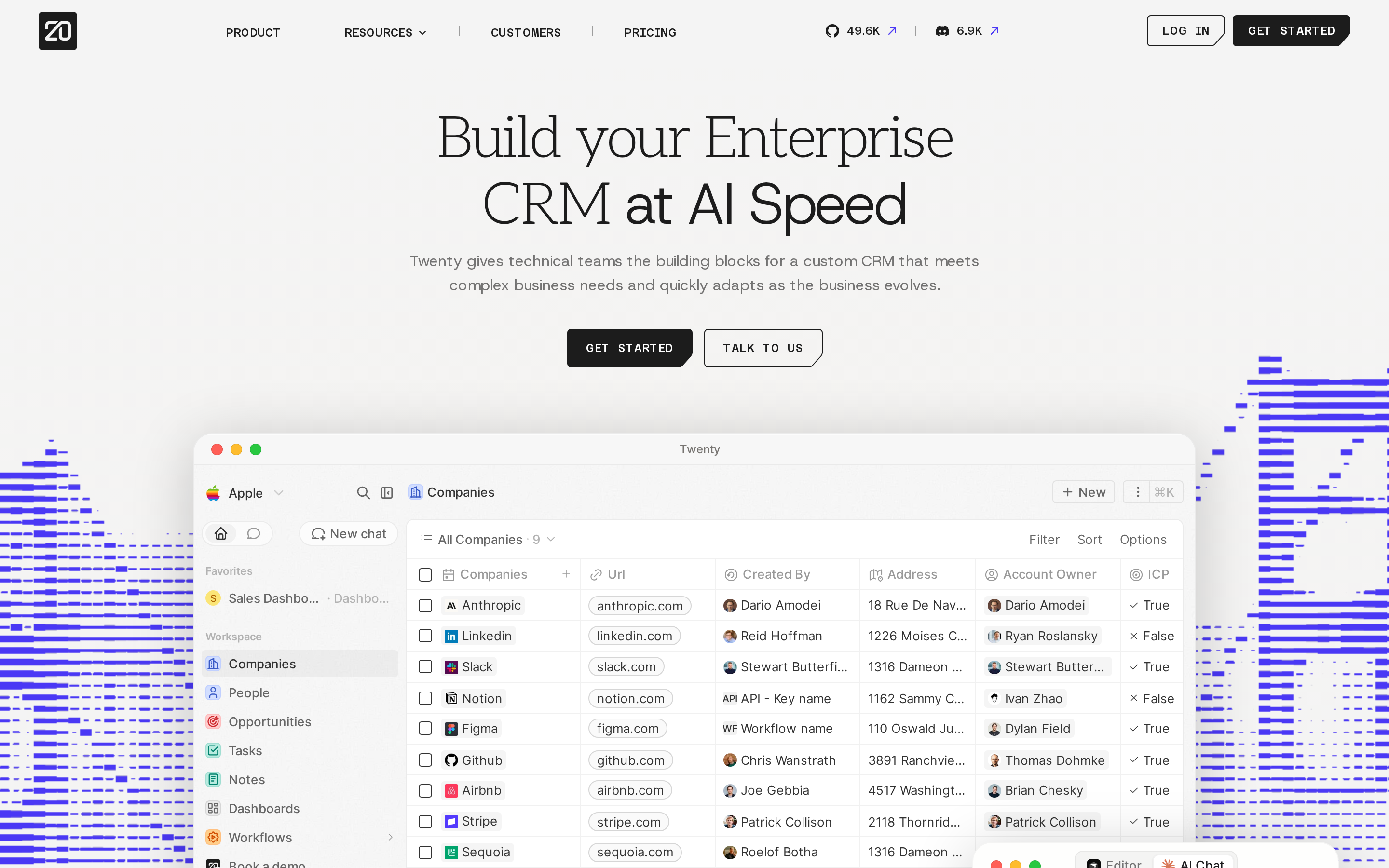
- Twenty CRM — open-source, developer-friendly CRM; a credible alternative to Salesforce / HubSpot for teams that want to own their data.
- HubSpot, Zoho, Salesforce — when market SaaS is the best fit.
E-commerce & retail
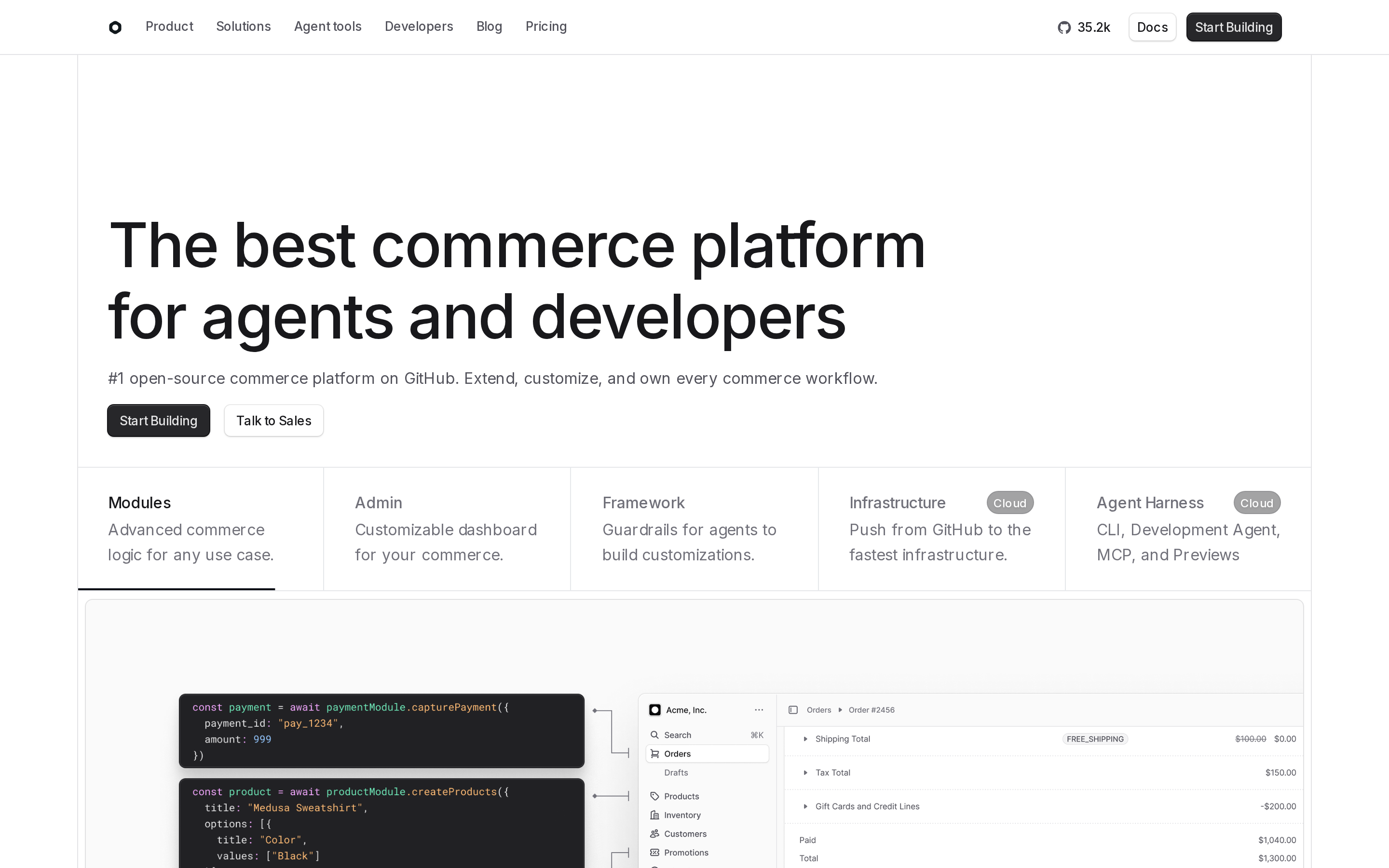
- MedusaJS — headless open-source commerce engine for demanding brands and marketplaces.
- Shopify, WooCommerce, PrestaShop — depending on volume, budget and customisation needs.
- Native retail apps (e.g. Monoprix Tunisia) when the customer journey goes beyond an online store.
Collaboration, documents & vertical tools
- DMS / collab: Nextcloud, Google Workspace, Microsoft 365.
- BI: Metabase, Looker Studio, Power BI.
- Projects & engineering: Averroes (AEC / EPC document control).
- Verticals: healthcare, hospitality, banking / insurance, industry, events.
→ See also our Solutions page and case studies.
Our 6-step method
1. Discovery & audit (1 to 3 weeks)
We meet business and IT stakeholders, map critical processes, list existing systems (accounting, banking, e-commerce, WMS, CRM, SSO) and prioritise use cases.
Deliverables:
- AS-IS / TO-BE map;
- requirements matrix (must / should / could);
- complexity and risk estimate;
- a short, actionable functional brief.
2. Benchmark & short-list
We build a short-list of 2 to 3 solutions with an objective grid:
| Criterion | What we measure |
|---|---|
| Functional fit | Coverage of priority use cases |
| 3-year TCO | Licences + integration + hosting + support |
| Hosting & sovereignty | SaaS, EU cloud, on-premise, sensitive data |
| Security & compliance | GDPR, roles, audit logs, SSO |
| Ecosystem | Integrators, marketplace, community |
| Vendor roadmap | Stability, open-source, exit strategy |
Vendor demos are scripted on your use cases — not the generic marketing pitch.
3. Targeted proof of concept (POC)
On structuring projects, we validate risk points (critical integrations, volume, business UX) before any multi-year commitment. A 2-to-6-week POC prevents months of regret.
4. Negotiation & contracting
We negotiate alongside you:
- licences and seats;
- support terms and SLAs;
- data portability / exit clauses;
- price evolution terms.
On large contracts, this work often repays our fees many times over.
5. Integration & deployment
Our Paris · Tunis teams handle:
- business configuration;
- integrations (API, ETL, webhooks, SSO, accounting connectors);
- historical data migration and quality checks;
- key-user training and documentation;
- pilot then industrialisation (iterative method).
6. Support, maintenance & evolution
After go-live, we remain your single point of contact:
- L2 / L3 support;
- corrective and evolutionary maintenance;
- version upgrades;
- new modules and automations (including AI agents).
You are not abandoned to an anonymous international hotline.
8 pitfalls to avoid when buying software
- Buying the demo, not the business fit — a modern UI does not fix a missing process.
- Underestimating integration — 40–60% of real budget is often outside licences.
- Ignoring TCO — seat price is misleading without run, training and evolution.
- No business sponsor — without an owner, the project stalls.
- Big bang — a pilot beats 18 months of invisible configuration.
- Dirty data — migrating dirty data multiplies support tickets.
- Change management forgotten — a tool only works if people adopt it.
- No exit strategy — always plan data export and portability.
Who we work with
| Profile | Typical needs |
|---|---|
| SMB / mid-market | First structuring ERP or CRM, e-commerce, operations digitalisation |
| Multi-site groups | Tool harmonisation, integrations, consolidated reporting |
| Scale-up startups | Modern stack, open-source, time-to-market |
| Regulated sectors | Banking, insurance, healthcare — security, traceability, compliance |
| Retail & distribution | Omnichannel, loyalty, inventory, mobile apps |
We mainly operate in France and Tunisia / North Africa, with French-speaking delivery capacity and a competitive cost / expertise ratio.
Example engagements
- ERPNext to industrialise finance, inventory and manufacturing for a mid-market company.
- Twenty CRM deployed and customised for a sales team leaving Salesforce.
- MedusaJS for a brand that wants controlled headless commerce.
- Averroes for document control on engineering projects.
- Retail apps (Monoprix) and custom business software delivered end-to-end.
Every engagement combines product advisory, engineering and operations.
How much does it cost? (order of magnitude)
Budget rests on three pillars:
- Licences — often per user / month (SaaS) or managed open-source subscription.
- Integration — framing, configuration, data, connectors, training.
- Run — hosting, support, maintenance, evolution.
| Project type | Indicative budget |
|---|---|
| SMB CRM or e-commerce | from €15,000 |
| Multi-site SMB / mid-market ERP | €50,000 – €200,000 |
| Enterprise programme | on quote |
We always provide a 3-year estimate with written assumptions before any commitment.
FAQ — Software solutions sales
Are you tied to a single vendor?
No. We are independent. Open-source, SaaS or custom depending on your context.
Can you take over an already-started project?
Yes — audit of the existing setup, recovery plan, renegotiation if needed, crisis exit plan.
Do you host the solutions?
Yes: Google Cloud, AWS, on-premise or hybrid, depending on sovereignty constraints.
Do you work only in French?
French and English, with teams in Paris and Tunis.
How long until go-live?
From a few weeks (targeted CRM / e-commerce) to 4–9 months (structuring ERP), depending on scope.
Ready to structure your software stack?
Our team replies within 24 hours. The initial needs audit is free.
Request a free audit · See our expertise · Our case studies · Our solutions