
Agentic Coding — the Apeiron guide
How we combine Claude Code, Cursor, Codex and Lovable with senior engineers to industrialize agent-driven software delivery.

10× faster, no compromise on quality. Apeiron orchestrates the best coding agents — Claude Code, Cursor, Codex, Lovable, Windsurf, Aider — driven by senior engineers, to deliver production-grade software.
Software development changed in 18 months
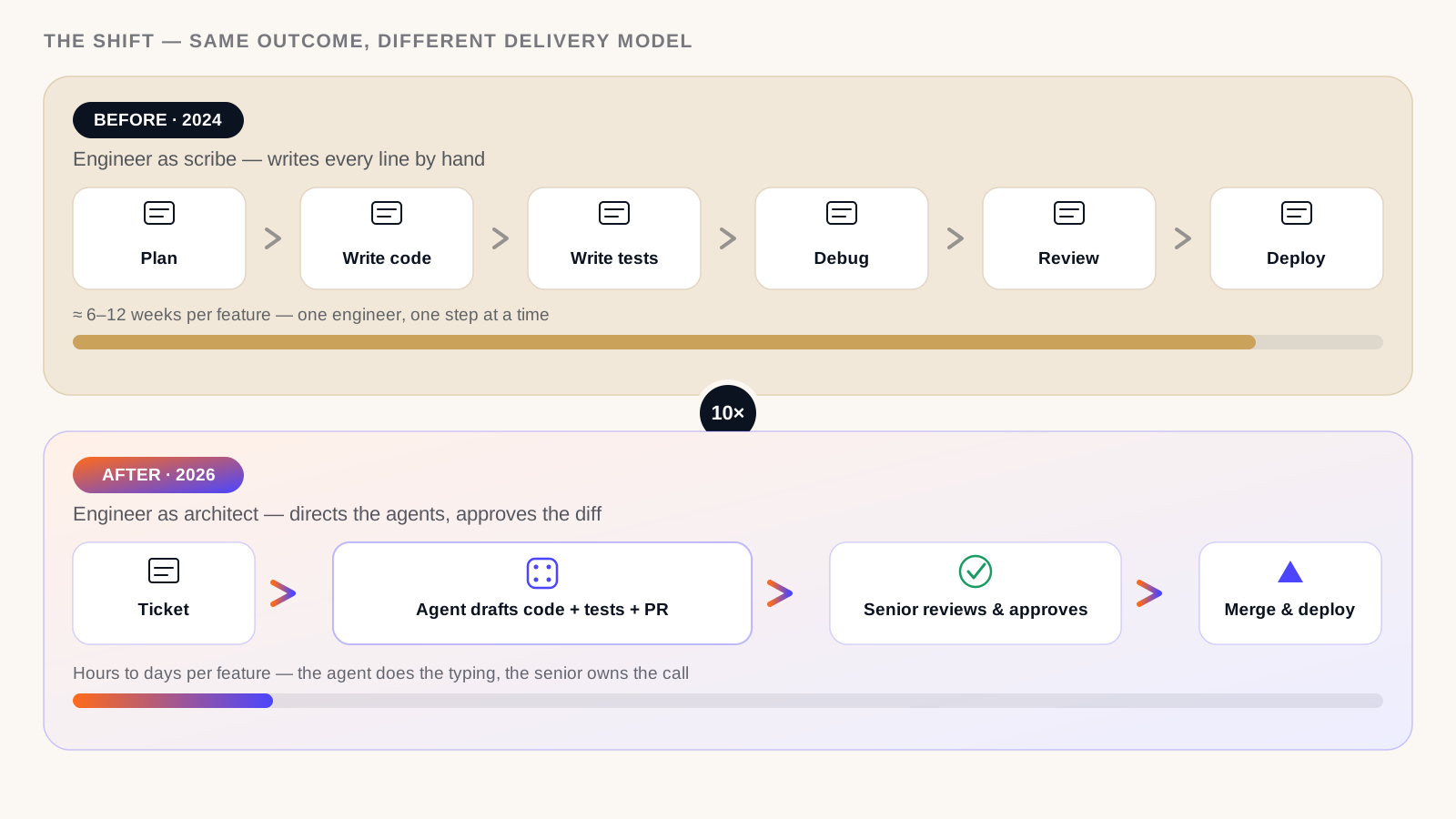
In 2024, AI suggested lines of code. In 2026, coding agents pick up tickets, write code, run tests, open pull requests, fix themselves after review, and deploy. The engineer's role shifts from "scribe" to architect, reviewer, quality owner.
Used well, an agent multiplies a squad's velocity by 5 to 10×. Used poorly, it produces invisible technical debt that blows up in production three months later. Our job: the first, never the second.
The transformation: software engineering in the agentic era
The job hasn't shrunk — it has moved up a level. The engineer used to spend most of a sprint typing: planning, writing the code, writing the tests, debugging, then handing it off for review. In an agentic workflow, the agent absorbs that typing — drafting the code, the tests and the pull request in one pass — and the engineer spends the sprint on judgment: framing the ticket, reviewing the diff, and owning the decision to ship.
The agents we master
- Claude Code (Anthropic) — best-in-class for large refactors, whole-repo understanding and end-to-end GitHub issue resolution.
- Cursor — the reference IDE, with a composer agent, semantic code indexing and real-time AI reviews.
- Codex / GPT-Codex (OpenAI) — excellent on scripts, migrations, test generation.
- Lovable — the full-stack agentic studio to ship complete web apps (frontend + Supabase + auth + payments) in hours.
- Windsurf (Codeium) — fast local agent, ideal for air-gapped environments.
- Aider — open-source CLI agent, perfect to drive Git from the terminal and script large refactors.
- Devin / Factory / Cognition — cloud autonomous agents for large backlogs.
- GitHub Copilot Workspace — issue planning and execution directly inside GitHub.
Our offering
1. Agentic Delivery Squad
An Apeiron squad (senior Tech Lead + 1 to 3 engineers + agents) takes ownership of a backlog or a full project. We ship in weekly sprints with demo, metrics and production-grade code.
2. AI Coding Enablement
We train and equip your teams to adopt agents safely: Claude Code / Cursor setup, prompts, guardrails, reviews, dedicated CI. Typical outcome: +60 to +200 % velocity within 3 months.
3. Autonomous Backlog Runner
Your GitHub / Linear / Jira issues are triaged, prepared and executed by our supervised agents 24×7. We commit to a merged-PR rate ≥ 70 %.
4. Legacy Modernization
Migrate legacy stacks (Java 8 → 21, Angular.js → React, monolith → services) with agent-driven refactors — 3 to 5× faster than a classic migration.
Our method: "Agent in the Loop, Senior in Command"
Six steps, repeated every sprint — a senior engineer stays in the loop at each one, not just at the final review.
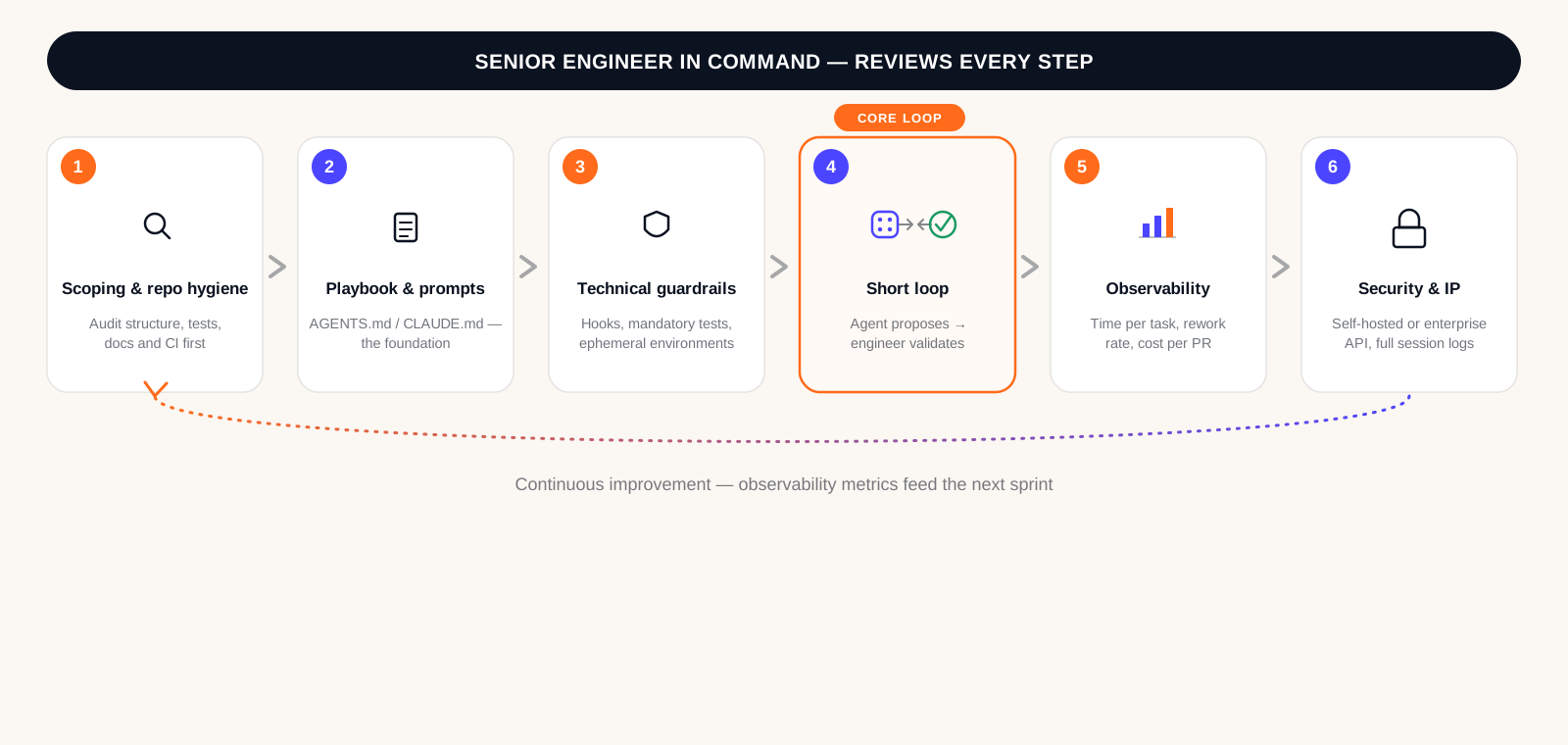
- Scoping & repo hygiene — we start with an audit: structure, tests, docs, CI. Agents shine on clean repos; we clean up first.
- Playbook & prompts — we write an
AGENTS.md(orCLAUDE.md) specific to your codebase: conventions, patterns, guardrails, expected tests. That's the foundation. - Technical guardrails — pre-commit hooks, mandatory tests, linters, automated security reviews, ephemeral environments per PR.
- Short loop — each task is broken down into 30-min to 2-hour units. The agent proposes, the engineer validates or corrects. No unreviewed PR — ever.
- Observability — we measure time per task, rework rate, post-merge bugs, cost per PR. These metrics drive continuous improvement.
- Security & IP — self-hosted or enterprise API models depending on your constraints, no code exfiltration, full session logging.
Our toolchain, end to end
We don't improvise the stack project to project — the same seven-stage chain runs every engagement, each stage owned by one purpose-built tool instead of a pile of overlapping ones.
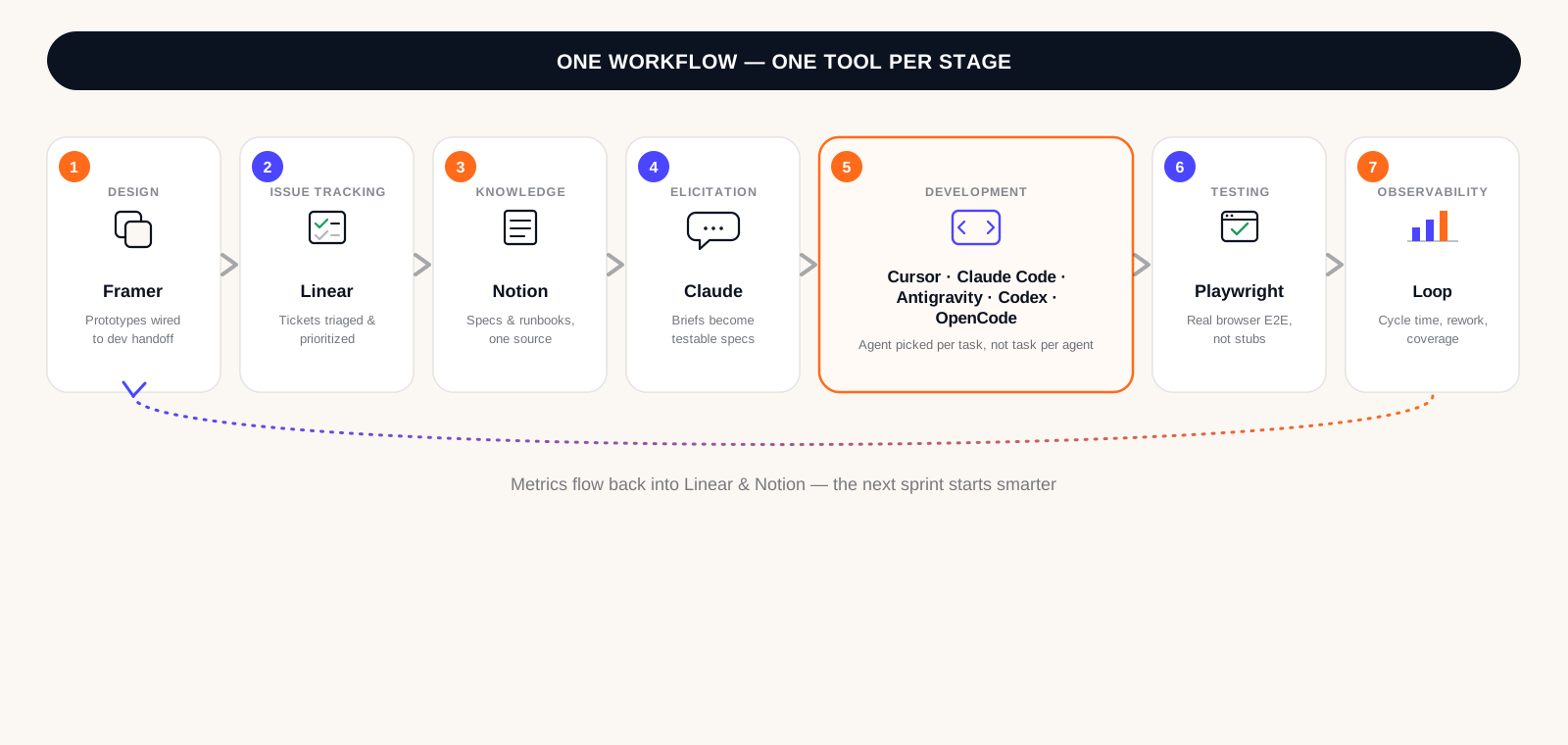
- Design — Framer. Interactive, production-close prototypes the dev team — and the agents — can inspect directly, not a static handoff deck.
- Issue tracking — Linear. Every ticket triaged, scoped and prioritized here; it's the source of truth an agent reads before touching code.
- Knowledge management — Notion. Specs, decisions and runbooks live in one place agents can query instead of re-deriving context every sprint.
- Requirement elicitation — Claude. Fuzzy briefs get turned into structured, testable specs before a single line of code is written.
- Development — Cursor, Claude Code, Antigravity, Codex, OpenCode. We pick the agent for the task, not the task for the agent: Claude Code for whole-repo refactors, Codex for scripts and migrations, Cursor for day-to-day IDE work, Antigravity and OpenCode where the engagement calls for them.
- Testing automation — Playwright. Agents write and run real end-to-end browser tests, not just unit stubs — regressions get caught before review, not after deploy.
- Loop → Observability. Cycle time, rework rate and coverage flow back into Linear and Notion, so the next sprint starts smarter than the last.
Guardrails: what we refuse
An agent is not an engineer. We frame it hard:
- No merge without human review. Ever.
- No direct prod access. Agents propose, a human approves the deploy.
- No secrets in context. Rotation, vaults, runtime injection only.
- No agents on regulated code without a full audit trail. Health, finance, defense → dedicated environments and full logging.
- No "vibe coding" in production. Every change must be testable and reversible.
Security & compliance
- Model choice: Anthropic Claude, OpenAI, Google Gemini, or self-hosted open source models (Llama, Qwen, DeepSeek) for sensitive environments.
- Zero retention enabled on partner APIs, signed DPAs.
- Full prompt and diff logging, exportable for ISO 27001, SOC 2, HDS audits.
- Private VPC support and on-prem / air-gapped deployments with local agents (Windsurf, Aider + Ollama).
Measurable outcomes
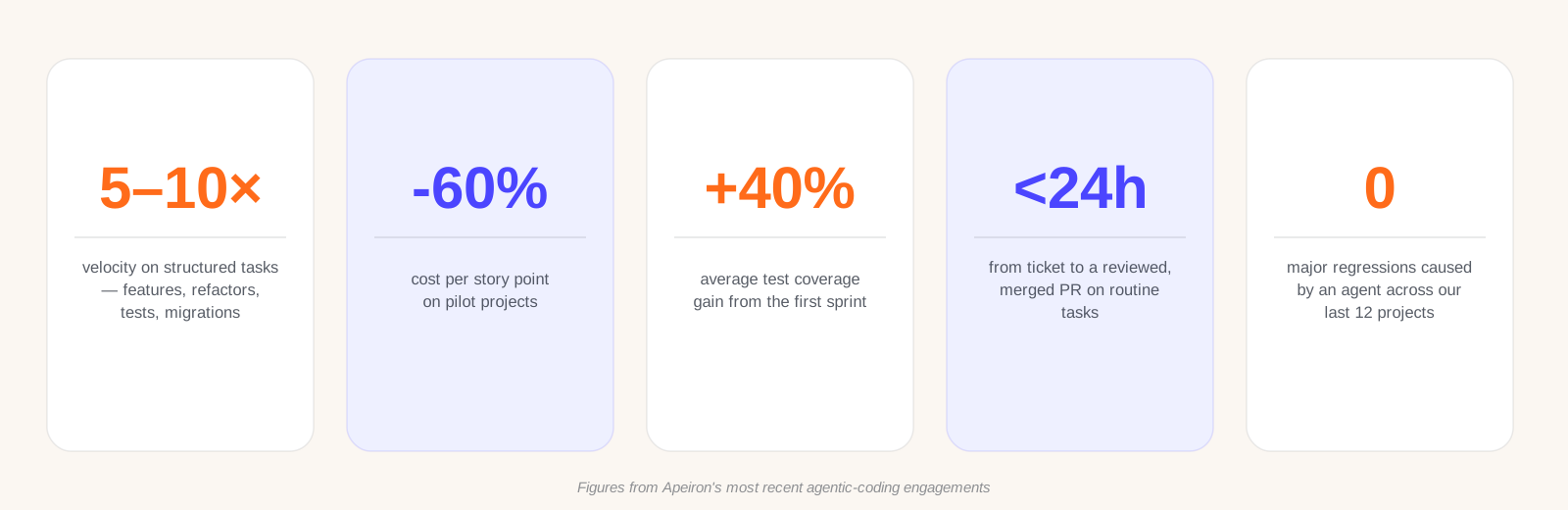
- 5 to 10× velocity on structured tasks (features, refactors, tests, migrations).
- -60 % cost per story point on pilot projects.
- +40 % test coverage on average from the first sprint.
- < 24 h from ticket to reviewed and merged PR on routine tasks.
- 0 major regressions caused by an agent across our last 12 projects — thanks to systematic senior review.
Who it's for
- SaaS vendors that want to triple velocity without doubling headcount.
- CIOs that need to modernize legacy without stopping production.
- Startups that need to move from prototype to robust product in weeks.
- Platform teams that want to equip their internal devs with governed agents.
Ready to switch
We start a pilot in one week, on a bounded scope, with clear metrics and deliverables. If the pilot convinces you, we industrialize. Otherwise, you stop — no commitment.